South Africa's specialist in haul road dust suppression, stockpile dust control, and automated misting — serving mining, ports and agriculture on a national scale.
Haul road stabilisation, mobile stockpile treatment & automated misting for heavy-traffic mine environments across South Africa and Africa.
Port road suppression and fine-droplet misting arrays meeting stringent export compliance requirements at major shipping terminals.
Eco-safe road treatments protecting crop yields and preventing red spider mite infestations on mega fruit farms.
DustBOND (Lignosulphonates + Polymers), BioSHIELD (Molasses and Polymers) and PyroBIND (Synthetic Surfactant Stick) — MSDS-certified, lab-tested, chloride-free.
Comprehensive dust suppression programs for mining operations, Transnet national ports, and commercial agriculture — engineered to reduce costs, protect communities, and ensure full regulatory compliance.
Comprehensive, multi-year dust management programs built for severe, heavy-traffic environments.
Meeting stringent environmental and export compliance laws at major South African shipping terminals.
Protecting crop yields and agricultural infrastructure from ambient dust contamination.
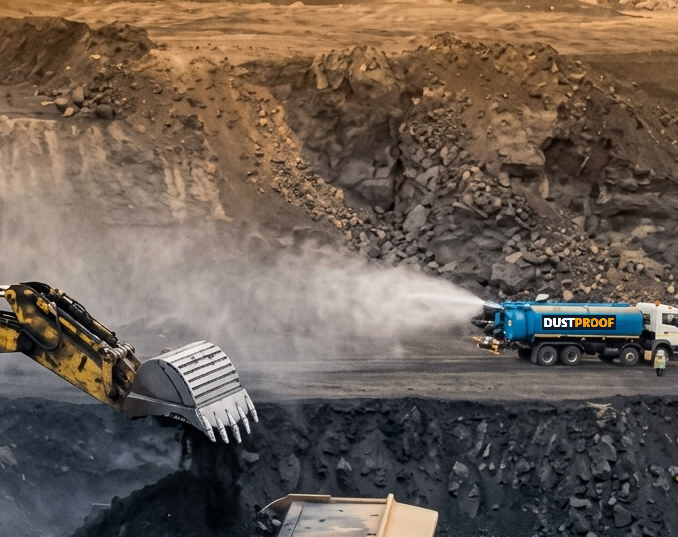
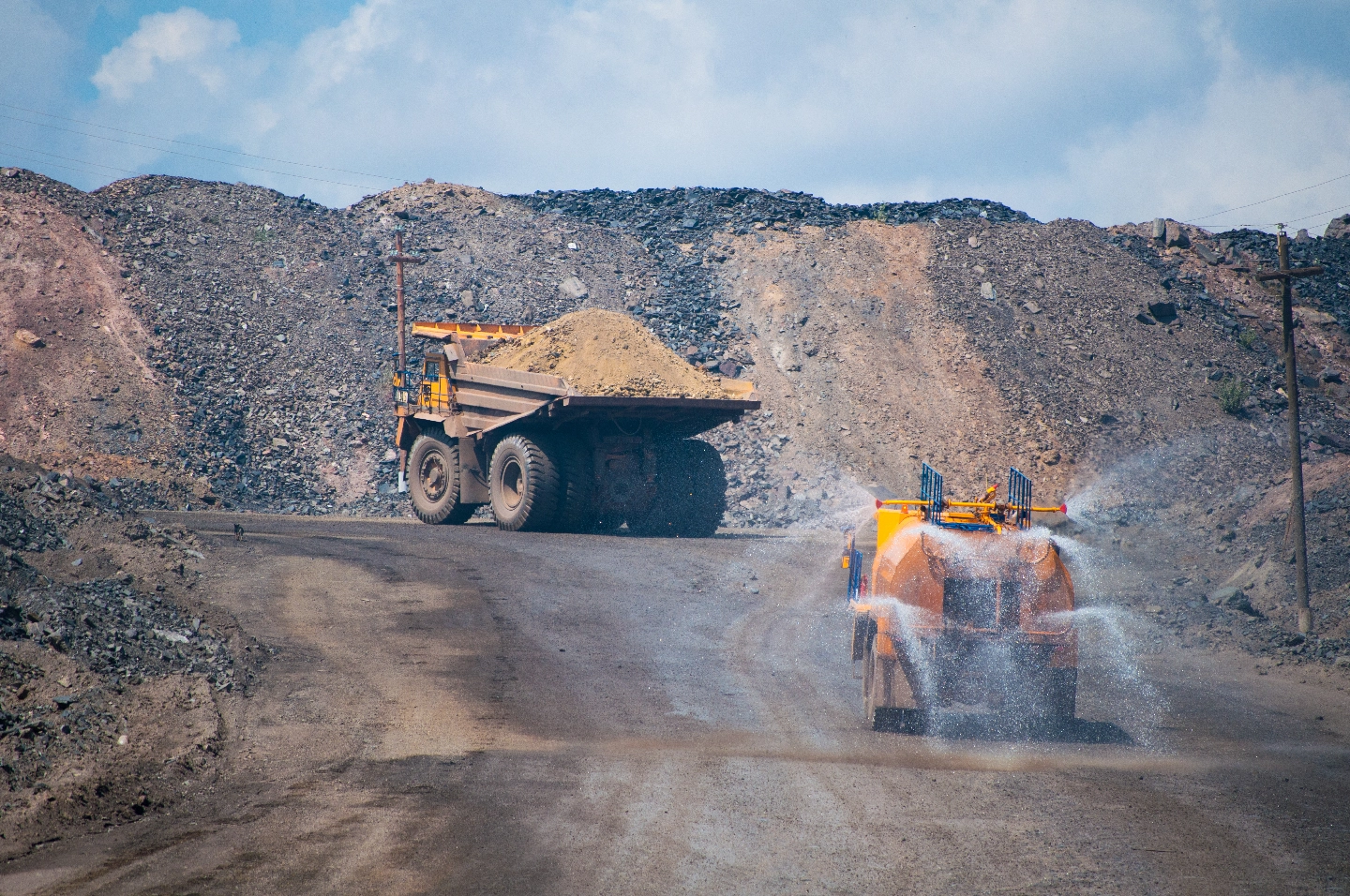
We utilise a specialised fleet of bowsers equipped with rear-end spray bar systems designed for high-accuracy chemical distribution.
Premium DustBOND (Lignosulphonates + Polymers), BioSHIELD (Molasses + Polymers) and PyroBIND (Synthetic Surfactant Stick)
Deep-penetrating binding agents consolidate loose road fines into a tightly bound, aggregate driving surface — eliminating fugitive dust at source.
Unlike fixed sprayers that leave blind spots, our mobile units go exactly where wind direction or operational layout demands — targeting fugitive dust at active stockpiles before it becomes airborne.
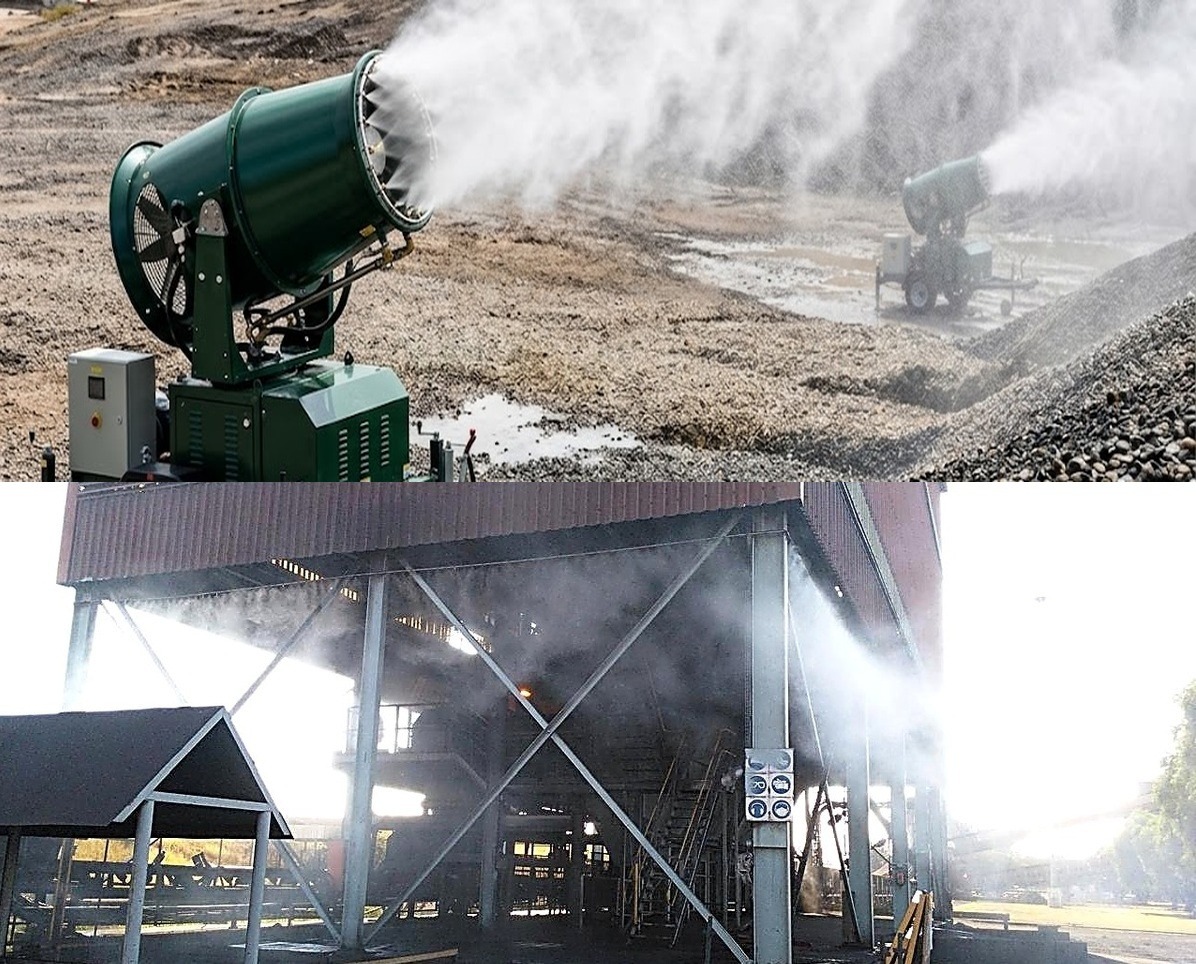
Heavy-duty, high-throw blaster cannon misting systems mounted directly onto our mobile trucks.
Standard operation uses pure water misting for active piles. Where long-term crusting or deep stabilization is required by the mine, our trucks are fully equipped to blend and apply specialised settling chemicals directly through the cannons. Application Type Minerals: Coal, Manganese, Iron Ore, Zinc, Lime, Copper, Nickel, Gold Tailing and Fly Ash.
Engineered for transfer zones, hopper systems, conveyors, and rail coaches at mines and port terminals.
Fully automated via movement and proximity sensors. The fine-droplet vapour triggers only when a truck moves in to load/offload or when a rail coach advances to empty.
The system releases a highly atomised mist of ultra-fine water droplets. These droplets collide with and capture airborne PM10 and PM2.5 dust particles, forcing them to settle immediately without over wetting or (creating a slurry effect in minerals deposits on conveyor systems) degrading the product composition.
Three purpose-engineered chemical formulations, each optimised for specific site conditions and operational demands.
Designed specifically for heavy-haul road infrastructures subject to extreme axle loads, our Lignosulphonates-Polymer blend uses the natural structural properties of lignin (the organic polymer that binds wood fibres together) and fortifies it with synthetic elastomeric polymers.
Operational Benefits and Technical Performance Matrix
Our Molasses + Polymer blend is engineered for arid, low-humidity environments (such as the Northern Cape mining belt). It utilises the highly hygroscopic (moisture-retaining) and sticky properties of condensed molasses solubles — a natural byproduct of the sugar refining process — chemically stabilised with advanced moisture-locking polymers.
Operational Benefits and Technical Performance Matrix
PyroBIND is a completely synthetic, water emulsifiable solid stick dust suppressant. A proprietary combination of water-soluble solids and synthetic surfactant technology provides effective dust control once the cartridge is added to water through a manifold system converting the stick to a soluble liquid.
Operational Benefits and Technical Performance Matrix
| Engineering Parameter | DustBOND — Lignosulphonates + Polymer | BioSHIELD — Molasses + Polymer | PyroBIND — Water Emulsifiable Stick |
|---|---|---|---|
| Primary Function | Hard crusting, structural compaction, load-bearing reinforcement | High moisture retention, particle agglomeration, surface elasticity | Surface tension reduction, dust penetration and knock-down |
| Best Used On | High-traffic mining haul roads, unpaved heavy logistics routes | Port access areas, stockpile perimeters, orchard access roads | Haul roads, crusher areas, conveyor transfer points, targeted application zones |
| Arid Climate Performance | Excellent (requires established curing window) | Superior — actively extracts moisture from ambient humidity | Consistent — synthetic formulation unaffected by ambient humidity levels |
| Rain/Washout Resistance | High — due to cross-linking waterproofing polymers | Moderate — requires maintenance top-ups after heavy rainfall | Moderate — reapplication as cartridge self-meters into water flow |
| Corrosion Index | Completely Non-Corrosive | Non-Corrosive / Equipment Safe | Non-Corrosive — hard water compatible |
| Environmental Footprint | Low carbon footprint — organic wood derivative | Zero waste — sustainable agricultural byproduct | Completely synthetic — no organic waste, no measuring waste |
At DUST PROOF, we don't just suppress dust – we engineer comprehensive, site-wide environmental solutions – road surface stabilisation, stockpile active operations mitigating airborne dust and high-pressure automated mechanical misting system installation solution.
We treat dust control as a precise science, analyse your operation data to custom-design and deploy tailor systems to solve your specific fugitive dust challenges at the root.
Safety hazardous airborne particles compromise operator visibility and causes long-term respiratory risks, threatens mechanical assets with premature wear and ensure your workforce returns home safely every day.
We partner with on-site environmental compliance teams to ensure air quality standards (including PM10 and PM2.5 limits) are adhered to. Our formulated DustBOND, BioSHIELD and PyroBIND products protect ecosystems while keeping your site firmly in the green.
We conduct our business ethically with transparency and consistency. We strive to meet the highest standards as required by each sight. Our focus is geared towards long-term relationships between customers, invertors, employees and communities, delivering sustainable trust bonds and accountability.
Our DustBOND, BioSHIELD and PyroBIND products contribute to measurable reduction in:
Reduces water overall consumption significantly.
Reduces wear due to significantly improved road surface area.
Decreasing the frequency of application.
CO2 reduction by reducing heavy equipment usage.
Dust Proof has been engineering dust suppression solutions across South Africa for 16 years. Whether you're a mine owner or manager burdened by dust, a port operator needing compliance support, or a commercial farm protecting your crops — talk to Dust Proof about a bespoke dust management strategy that reduces costs, improves operations, and ensures health, safety, and environmental compliance.
Serving clients across Gauteng, Johannesburg, Mpumalanga, Northern Cape, Limpopo and nationally across South Africa.
All Dust Proof chemical applications are supported by comprehensive Material Safety Data Sheets (MSDS) and independent environmental laboratory certifications, ensuring strict compliance with local South African environmental legislation and mine health and safety regulations.
Not sure which category applies to your site? Contact us for a free dust assessment.
Everything you need to know about dust suppression, our products, compliance requirements, and how we work.
Fugitive dust refers to particulate matter that becomes airborne from industrial operations without passing through a defined exhaust or emission point — typically generated by haul roads, stockpiles, crushers, conveyors, and bulk material handling. Unlike stack emissions, fugitive dust is uncontrolled and disperses freely into the surrounding environment. It poses serious risks to worker health (respiratory disease, silicosis), reduces visibility on haul roads causing accidents, accelerates mechanical wear on equipment, and can result in regulatory non-compliance under South African environmental and mining health legislation.
PM10 refers to particulate matter with a diameter of 10 micrometres or less — small enough to be inhaled into the nose and throat. PM2.5 refers to particles of 2.5 micrometres or less, which penetrate deep into the lungs and can enter the bloodstream. Both are regulated under South African air quality standards (National Environmental Management: Air Quality Act). Dust suppression systems must reduce both fractions to keep sites compliant. Our automated misting installations are specifically engineered to capture and settle PM10 and PM2.5 particles through fine-droplet collision.
Respirable dust is the fraction of airborne dust fine enough to penetrate the gas-exchange region of the lung (typically particles below 4 micrometres). Prolonged exposure causes occupational lung diseases including silicosis (from silica dust), coal workers' pneumoconiosis (from coal dust), and general chronic obstructive pulmonary disease (COPD). South African mines are legally required under the Mine Health and Safety Act to monitor and control respirable dust exposure levels. Effective dust suppression at source — haul roads, stockpiles, crushers, and transfer points — is the primary engineering control.
Haul road dust is generated when heavy mining vehicles (typically 90–360 tonne payload trucks) travel over unpaved or gravel road surfaces. The extreme axle loads pulverise aggregate fines, and tyre action launches these particles into the air as a rolling dust plume. Without treatment, fine road particles are continuously replenished as the road surface degrades. Wind amplifies the dispersal. Standard water-only treatment evaporates rapidly — especially in arid regions like the Northern Cape — providing only minutes of suppression per application cycle. Chemical dust suppressants like DustBOND, BioSHIELD and PyroBIND bind fine particles into the road matrix, providing suppression for days between treatments.
Dust suppression refers to actively preventing dust from becoming airborne — typically through chemical binding agents applied to road surfaces or stockpiles, or fine-droplet misting at point sources. Dust control is a broader term encompassing all measures used to manage airborne dust, including suppression, enclosures, ventilation, personal protective equipment, and operational changes. Dust Proof specialises in engineered suppression solutions — the most cost-effective first line of defence for open-pit mines, port terminals, and agricultural operations.
Silica dust (crystalline silicon dioxide) is released when materials containing quartz — such as rock, sand, granite, and many mineral ores — are drilled, blasted, crushed, or ground. It is one of the most hazardous occupational dust types, causing irreversible silicosis and increasing lung cancer risk. In South Africa, the highest-risk industries include gold mining, iron ore mining, quarrying, construction, and road building. Effective silica dust suppression at crusher stations, blast sites, and haul roads is a legal requirement and a moral imperative.
Our haul road dust suppression service deploys a specialised bowser fleet fitted with rear-end spray bar systems for precision chemical application. The process involves: (1) surface preparation to ensure even penetration, (2) application of a diluted DustBOND, BioSHIELD or PyroBIND solution at calibrated rates, (3) the chemical agent migrating into the road matrix and binding fine particles together. The result is a consolidated, aggregate driving surface that resists particle lift-off under traffic — reducing haul road dust by up to 80% compared to water-only treatment, and dramatically cutting re-application frequency.
Mobile stockpile dust treatment uses truck-mounted high-throw blaster cannons to project a fine mist directly onto active stockpile faces. It is needed when: wind speeds exceed thresholds that cause surface erosion from exposed stockpiles; during active tipping, loading, or reclaiming operations that disturb the pile surface; and at sites where fixed misting systems cannot cover the full stockpile footprint. Our mobile units treat coal dust, iron ore dust, manganese dust, and other bulk mineral stockpiles — going exactly where wind direction or operational layout demands, with no blind spots.
Our automated misting systems are permanently installed at high-dust point sources — transfer points, hopper systems, conveyor head stations, tippler stations, and rail coach unloading zones. They operate via movement and proximity sensors that trigger the system only when a vehicle moves in to load or offload, or when a rail coach advances. This eliminates wasted water and chemical between operations. The system releases a highly atomised mist of ultra-fine water droplets that collide with and capture airborne PM10 and PM2.5 fugitive dust particles, forcing them to settle immediately — without over-wetting or degrading material quality.
Yes. Crusher stations and conveyor transfer points are among the highest-intensity dust generation points on any mine or processing plant. We design and install fixed misting arrays and enclosure misting systems specifically for these applications. Crusher dust, conveyor dust, and transfer point dust are all managed through a combination of fine-droplet suppression at the point of generation and chemical binding on any spillage or road surfaces below.
DustBOND is a Lignosulphonate + Polymer blend engineered for heavy haul road dust suppression. Unlike water — which evaporates within minutes and provides no binding action — DustBOND's lignosulphonate molecules coat individual aggregate fines, forming a sticky, high-density matrix. As moisture evaporates, cross-linking polymers create an elastic, rubberised network that physically traps dust particles and binds them to larger aggregate stones. A single DustBOND application typically lasts days to weeks depending on traffic intensity, reducing water-cart cycles by up to 80% and cutting dust suppression costs by 30% versus water-only programs.
BioSHIELD is a Molasses + Polymer blend specifically engineered for arid, low-humidity environments such as the Northern Cape and Limpopo mining belts. It harnesses the highly hygroscopic (moisture-attracting) and adhesive properties of condensed molasses solubles — a natural byproduct of the sugar refining process — chemically stabilised with moisture-locking polymers. BioSHIELD is ideal for: coal dust suppression, manganese haul road suppression, iron ore stockpile treatment, and any site where rapid moisture loss renders standard treatments ineffective. It is MSDS-certified, lab-tested, and chloride-free.
PyroBIND is a completely synthetic, water emulsifiable dust suppressant supplied as a solid stick cartridge. Unlike liquid concentrates, PyroBIND is self-metering — the cartridge is added directly to water, eliminating the need for measuring equipment, mixing tanks, or dosing pumps. Its proprietary synthetic surfactant chemistry lowers water surface tension, enabling the solution to penetrate and knock down dust particles on contact. PyroBIND is hard water compatible and is designed for continuous haul road applications, crusher discharge areas, conveyor systems, and targeted transfer point suppression.
While DustBOND and BioSHIELD are liquid concentrate formulations that bind and stabilise road surfaces over extended periods, PyroBIND is a solid stick product that operates through surfactant action — reducing water surface tension to maximise dust knock-down efficiency per litre of water applied. Its key advantage is simplicity: no measuring, no dilution calculations, no dosing equipment. The cartridge self-meters as it dissolves, making it well-suited to operations that require a reliable, low-maintenance suppression solution at crushers, conveyors, and transfer points where liquid dosing systems are impractical.
Yes. DustBOND, BioSHIELD and PyroBIND are all chloride-free, which is critical — chloride-based suppressants (such as calcium chloride and magnesium chloride) leach into soil and groundwater, damaging ecosystems and corroding vehicle chassis. Our products are biodegradable, supported by comprehensive Material Safety Data Sheets (MSDS), and independently certified by environmental laboratories. They comply with South African environmental legislation including the National Environmental Management Act (NEMA) and the Mine Health and Safety Act.
Lignosulphonates are water-soluble organic polymers derived from lignin — the natural compound that binds wood fibres together — extracted as a byproduct of the paper pulping process. They have strong adhesive and dust-binding properties, are biodegradable, and are among the most cost-effective chemical dust suppressants available. When combined with synthetic elastomeric polymers (as in DustBOND), their performance is significantly enhanced — providing extended suppression windows, greater resistance to trafficking, and improved penetration into road fines.
Several pieces of legislation regulate dust on South African mines and industrial sites: the Mine Health and Safety Act (No. 29 of 1996) sets occupational exposure limits for respirable and inhalable dust; the National Environmental Management: Air Quality Act (No. 39 of 2004) governs ambient air quality including PM10 and PM2.5 thresholds; and the Occupational Health and Safety Act (No. 85 of 1993) applies to non-mining industrial sites. The Department of Mineral Resources (DMR) enforces mine dust compliance through scheduled inspections. Non-compliance can result in section 54 stoppages.
A Material Safety Data Sheet (MSDS) — now formally called a Safety Data Sheet (SDS) — is a standardised document that details the chemical composition, hazard classification, handling procedures, storage requirements, and environmental impact of a chemical product. For dust suppressants, an MSDS is required by law before application on a mine site and must be available to site safety officers and emergency responders. All Dust Proof products are supplied with current MSDS documentation and independently certified by environmental laboratories.
ISO 14001 requires organisations to identify and control their significant environmental aspects — of which fugitive dust emissions are typically a priority aspect for mining and industrial operations. A documented, engineered dust suppression program with measurable performance data (dust reduction percentages, application frequency, water consumption savings) provides the evidence required to demonstrate effective environmental management. Our DustBOND, BioSHIELD and PyroBIND treatments contribute directly to PM10 and PM2.5 reduction targets, tyre wear reduction, diesel consumption savings, and carbon footprint reduction — all measurable ISO 14001 performance indicators.
Dust Proof operates nationally across South Africa. Our primary areas of operation include Gauteng (Johannesburg region), Mpumalanga (coal mining operations), Northern Cape (iron ore and manganese mining), Limpopo (mining and industrial), and Western Cape (commercial agriculture and Transnet port operations). We also service Transnet National Ports at major shipping terminals across the country.
Contact our engineering team via the form on this page or call us directly. A site assessment typically involves: (1) a desktop review of your site layout, traffic volumes, and dust complaint history, (2) a site visit by one of our dust suppression engineers to identify all fugitive dust sources, (3) a written treatment recommendation specifying product selection, application rates, frequency, and projected cost savings. Site assessments are obligation-free for qualifying operations.
Yes. We offer multi-year dust management contracts for mining operations, ports, and commercial agricultural clients. Long-term contracts include scheduled treatment programs, dedicated bowser allocation, product supply at fixed rates, performance monitoring, and priority response for emergency dust events. Our contract clients benefit from significantly reduced cost-per-kilometre suppression costs versus ad-hoc treatment, and a single accountable dust management partner across all site activities.